U.S. Commits $108 Million to Keep Ukraine's FrankenSAM HAWK Batteries Fighting

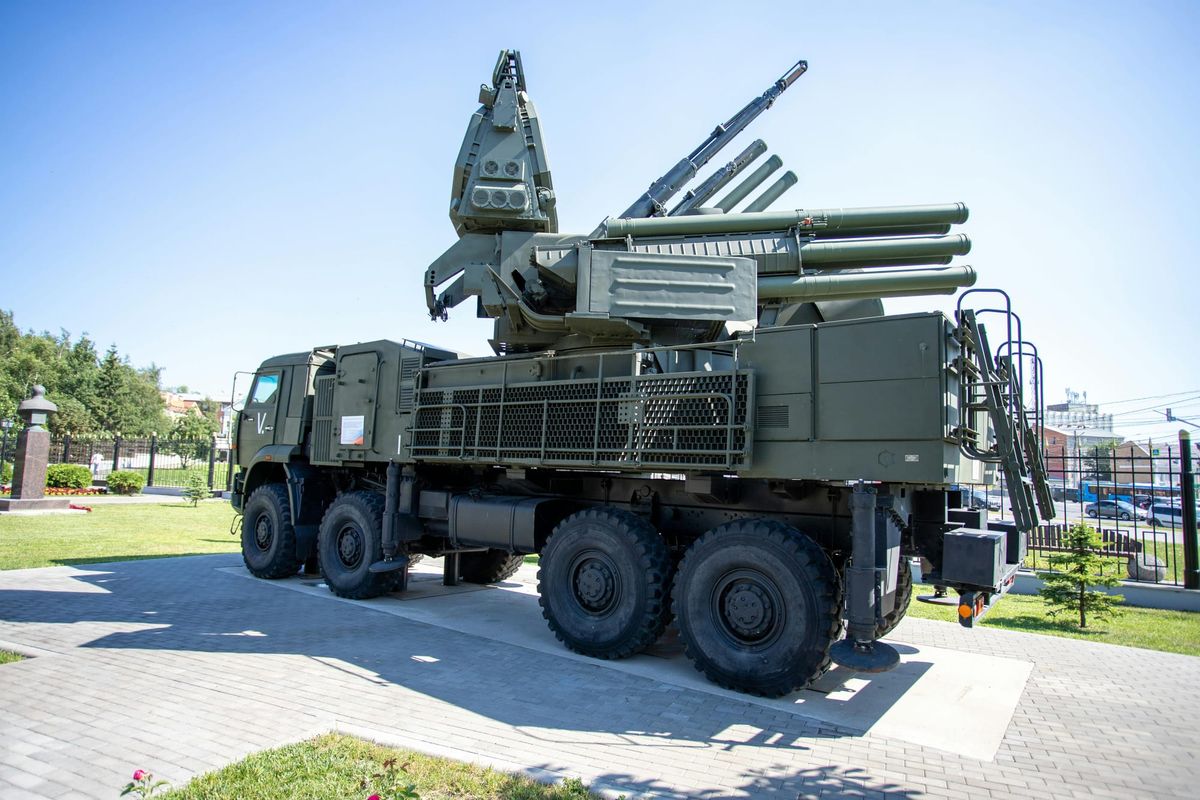
The United States has approved a new $108.1 million sustainment package to keep Ukraine's hybrid FrankenSAM HAWK air defense batteries combat-ready, the latest chapter in one of the most unconventional defense partnerships to emerge from the war with Russia. The sale, formally announced by the State Department on May 21, 2026, underscores Washington's continued commitment to Ukraine's layered air defense network at a time when Russian missile and drone strikes remain a daily threat to civilian infrastructure and military positions alike.
What the Package Covers
The approval, designated Defense Security Cooperation Agency (DSCA) notification No. 26-51, authorizes a Foreign Military Sale covering a comprehensive suite of sustainment services. According to the official State Department release, Ukraine requested erectable mast trailers, major system modifications, maintenance support, spare parts, consumables and accessories, and repair and return services for its FrankenSAM HAWK missile systems. U.S. government and contractor engineering, technical, and logistics support round out the package.
Colorado-based Sierra Nevada Corporation will serve as the principal contractor. Notably, the DSCA notification marks the first time the agency has formally used the term "FrankenSAM" in an official announcement related to HAWK sustainment — a sign that what began as an improvised battlefield workaround has now become a formalized and institutionalized element of U.S. security assistance to Ukraine.
This is also the third major HAWK-related Foreign Military Sale for Ukraine in just two years, reflecting the scale and tempo at which these systems are being operated and consumed in active combat.
Innovation Born From Necessity
To understand why this package matters, it helps to understand how the FrankenSAM program came to exist at all — a story that says as much about battlefield ingenuity as it does about the limits of Cold War-era logistics.
The program traces its origins to late 2022, when Ukrainian defense officials found themselves in a difficult position. Ukraine possessed roughly 60 Soviet-era Buk mobile launcher vehicles and radars that were sitting idle — fully operational hardware with no ammunition. The Soviet-manufactured 9M38 interceptor missiles required to arm those launchers were simply unavailable in Western stockpiles, and acquiring them from other sources proved impractical. Faced with an intensifying Russian air campaign, Ukrainian officials proposed a creative workaround: modify the Soviet launchers to accept NATO-standard Western missiles.
American engineers embraced the challenge. After more than seven months of testing and Pentagon approval, the first hybrid systems were ready — Soviet transporter-erector-launchers reborn as platforms for U.S.-built missiles. The program was named FrankenSAM, a reference to Mary Shelley's fictional creation: a functioning organism assembled from mismatched parts. The name stuck.
By 2026, FrankenSAM had evolved well beyond its origins as a stopgap. Three distinct variants are now known to exist: one pairing Soviet Buk-M1 launchers with American RIM-7 Sea Sparrow missiles; another combining Soviet-era radars with AIM-9 Sidewinder missiles; and a third, initially classified, that integrates Patriot missile components with Ukrainian domestic radar systems. The concept has since entered an industrial production phase and reached the international arms market, transforming from a battlefield improvisation into a recognized defense technology.
A Cold War Weapon With Modern Relevance
The MIM-23 HAWK — an acronym for Homing All the Way Killer — is not a new system. Developed by Raytheon in the early 1960s and first deployed by the U.S. Army in 1959, the HAWK was designed as a medium-range surface-to-air missile platform to defend against enemy aircraft, helicopters, and, later, cruise missiles. The United States retired the system from its own inventory years ago, but the HAWK's long service life with some 20 allied nations left a substantial global inventory that has now found renewed purpose in Ukraine.
The Improved HAWK, the variant operated by Ukrainian forces, is a capable system by any measure. It can engage targets at ranges of up to 40 to 50 kilometers and at altitudes reaching 18 kilometers, making it particularly well-suited for intercepting the cruise missiles, Shahed-type loitering munitions, and low-altitude strike aircraft that form the core of Russia's long-range air campaign. The MIM-23B missile itself uses a dual-thrust solid-propellant rocket motor to reach speeds of approximately Mach 2.4, carrying a 75-kilogram high-explosive blast-fragmentation warhead with both proximity and impact fuzes. Guidance relies on semi-active radar homing, with continuous-wave ground-based illumination steering the missile to its target.
On paper, that hit probability is estimated at around 85 percent by Western analysts — though Ukrainian operators, drawing on their accumulated combat experience, believe their results in the field have exceeded even that benchmark.
The HAWK is no stranger to combat. Israel scored the system's first confirmed air kill in 1967. Iranian forces used it extensively during the Iran-Iraq War. French forces in Chad downed a Libyan Tu-22 bomber with it in 1987. Kuwaiti batteries engaged Iraqi aircraft during the 1990 Gulf War. The system's pedigree spans decades and continents — and now, frontline southern Ukraine.
Ukraine's HAWK Record
Ukraine received its first HAWK systems in late 2022 and early 2023, with Spain providing the initial donation of Phase III and Improved HAWK units, followed by contributions from the United States and other NATO partners. Training 64 Ukrainian personnel to operate the systems accompanied Spain's first delivery of six launchers in the fall of 2023. Since then, the HAWK has compiled a combat record that defies its age.
Soldiers of the 208th Kherson Anti-Aircraft Missile Brigade, operating in the demanding southern front, were photographed on duty with MIM-23 HAWK launchers in Mykolaiv Oblast as recently as March 30, 2026 — a visible indicator that these batteries remain frontline assets, not reserve equipment.
The operational results have been striking. According to statements from the Ukrainian Air Force, a single HAWK battery has intercepted at least 14 Russian cruise missiles — primarily Kh-59 variants and at least one Kalibr — along with more than 40 Iranian-designed Shahed loitering drones. In one particularly notable engagement, a single HAWK launcher downed three cruise missiles in three consecutive launches during a single Russian strike wave, a performance that the Ukrainian military captured on video and released publicly. Ukrainian crews have achieved what the military calls a near-perfect launch-to-kill ratio in some engagements.
Ukraine's multi-layered air defense strategy places the HAWK within a broader architecture that also includes Patriot systems, NASAMS, and various other Western-supplied platforms. Each system defends a different altitude band and range tier. The HAWK, covering the medium-range medium-altitude layer, fills a gap that no other widely available system fills as cost-effectively.
Why Sustainment Matters Now
The $108.1 million package is not about acquiring new capabilities — it is about keeping existing ones alive. That distinction matters enormously on a battlefield where high operational tempo is relentless and every missile fired and every radar hour logged chips away at system readiness.
As Russia's aerial campaign has intensified, attrition of interceptor stocks and wear on radar and launcher components have placed increasing pressure on Ukraine's air defense inventory. The HAWK, like any system operating continuously in a contested environment, requires regular maintenance, component replacement, and technical support that only the original manufacturer's ecosystem can reliably provide. Without sustained logistical backing, even proven systems become museum pieces.
Washington has been explicit about the strategic rationale. The State Department stated that the proposed sale supports U.S. foreign policy and national security objectives by improving the security of a partner country that it describes as a force for political and economic stability in Europe. Officials added that Ukraine is expected to absorb the equipment and services smoothly, and that the transfer will not alter the regional military balance or affect U.S. defense readiness — a standard finding for Foreign Military Sales, but meaningful in signaling that Washington does not view the package as escalatory.
Hybrid Warfare and the Future of Air Defense
The FrankenSAM program has attracted attention well beyond Ukraine. In July 2024, the U.S. Senate Armed Services Committee proposed that the Air Force consider adapting the FrankenSAM concept for protecting its own air bases — a remarkable suggestion that positions Ukraine's improvised battlefield solution as a potential model for U.S. domestic base defense. The rationale is straightforward: if Soviet launchers can be cheaply and rapidly modified to fire Western missiles, the same logic applies to aging Western launchers that might otherwise be retired.
For U.S. defense planners watching the war in Ukraine, the HAWK-FrankenSAM combination offers lessons about what works in a high-intensity, sustained air war. Legacy systems, properly maintained and intelligently integrated, retain substantial combat value. Hybrid approaches that combine existing infrastructure with newer munitions can bridge capability gaps faster and more affordably than procuring new systems from scratch. And the importance of sustained logistical backing — not just headline deliveries — cannot be overstated.
The $108.1 million package is, in that sense, as much a statement of doctrine as it is a procurement decision. It is Washington saying: we delivered these systems, we trained your crews, we watched them perform — and we are committed to keeping them fighting.
Key Facts at a Glance
- Package value: $108.1 million (Foreign Military Sale)
- Announced: May 21, 2026 (DSCA Notification No. 26-51)
- Principal contractor: Sierra Nevada Corporation (Englewood, Colorado)
- System: FrankenSAM HAWK (MIM-23 Improved HAWK with hybrid adaptations)
- Package includes: Erectable mast trailers, major modifications, maintenance, spare parts, repair services, engineering and logistics support
- Combat unit operating system: 208th Kherson Anti-Aircraft Missile Brigade (southern front)
- HAWK engagement range: 40–50 km; altitude up to 18 km; speed Mach 2.4
- Estimated hit probability: ~85% (Western analysts); higher by Ukrainian estimates
- Historical context: Third major HAWK FMS for Ukraine in two years; first DSCA notice to formally use "FrankenSAM" designation
ArmedForcesNews.com covers U.S. and global military developments. All figures cited are sourced from official U.S. government releases and open-source defense reporting.