The Pentagon's Plan to Build 10,000 Low-Cost Cruise Missiles in Three Years

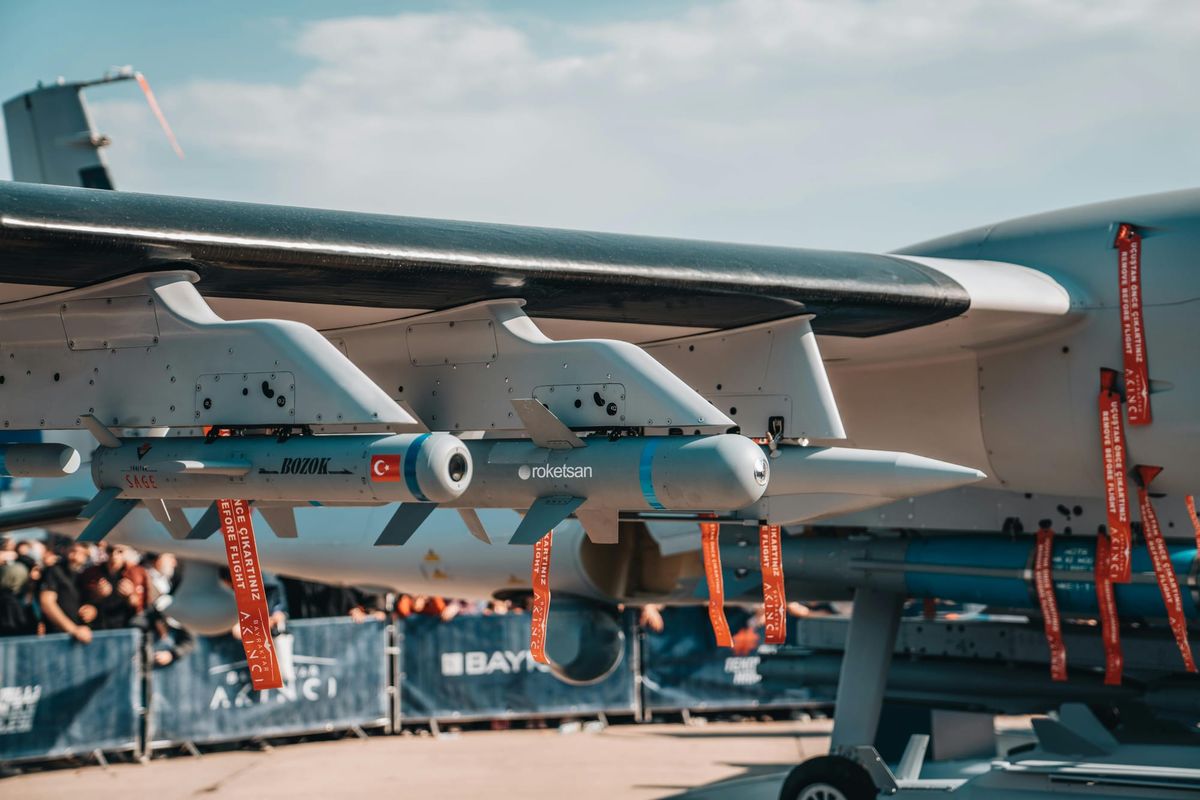
On May 13, 2026, the Pentagon made an announcement that would have seemed implausible even five years ago. The Department of War had signed framework agreements with four defense technology companies — Anduril, CoAspire, Leidos, and Zone 5 Technologies — to procure more than 10,000 low-cost, containerized cruise missiles over three years beginning in fiscal year 2027. A parallel agreement with startup Castelion laid the groundwork for up to 12,000 low-cost hypersonic missiles over five years. The combined ambition: to fundamentally change the economics and logistics of American strike power, building a deep stockpile of affordable, dispersable, mass-producible weapons as a direct response to the magazine crisis exposed by Operation Epic Fury.
"We will deliver affordable mass for our warfighters at unprecedented speed," declared Under Secretary of War for Research and Engineering Emil Michael. "These Framework Agreements commit American industry to on-time, on-cost delivery and investment in R&D and facilities."
The program — officially called the Low-Cost Containerized Missiles initiative, or LCCM — is Washington's most concrete answer yet to the existential question that the Iran war posed for American military power: what happens when you run out of precision weapons in the middle of a fight?
The Problem That Made LCCM Necessary
The Iran war consumed American precision strike inventory at a pace that has restructured Pentagon thinking about what a deep magazine looks like, how much it costs to fill, and how long it takes to reload.
U.S. forces fired more than 1,000 Tomahawk Land Attack Missiles in approximately six weeks of combat — against a peacetime production rate of roughly 90 per year. The Navy's FY2027 budget request includes $3 billion to produce 785 Tomahawks — a 1,200 percent increase in production compared to the previous year — and analysts estimate it will take at least five years to fully replenish what was expended. Precision Strike Missiles and ATACMS were consumed at rates approaching half the total combined inventory in the first two weeks. Patriot and THAAD interceptors are being rebuilt on timelines measured in years, not months.
The arithmetic is uncomfortable for American strategic planners. A Tomahawk costs approximately $2 million per missile. At that price, maintaining a truly deep strike magazine — thousands of weapons that can sustain weeks or months of intensive operations — requires procurement investment that the defense budget has historically not prioritized. Munitions, unlike ships and aircraft, are invisible between the time they are bought and the time they are used. They sit in bunkers and warehouses, generating no political constituency and no annual visibility. Congress and successive administrations consistently underfunded them, deferring the cost of a deep magazine to a future that has now arrived.
The LCCM program represents a structural response to that failure. Rather than simply buying more Tomahawks at $2 million each, the Pentagon is asking whether a missile with comparable or complementary strike capability can be built for a fraction of the cost, produced in the kind of numbers that make a genuine deep magazine achievable, and deployed in containers that eliminate the specialized launch infrastructure that traditional cruise missiles require.
The department's stated objective is explicit: "The Department is using the LCCM program to build a diverse portfolio of cost-effective, high-low mix of strike options that complement existing exquisite systems like TLAM." The language of "high-low mix" is deliberate — a recognition that the U.S. military needs both the precision and range of expensive, sophisticated weapons and the mass and affordability of cheaper ones, and that relying exclusively on the former is a strategic vulnerability that adversaries can exploit and have exploited.
The Four Companies and Their Missiles
The framework agreements were awarded simultaneously to four companies, each bringing a different missile design and production approach to the competition. Test missiles from all four will begin entering evaluation in June 2026 — this month — kicking off an assessment phase that will determine which systems progress to full production contracts, with deliveries beginning in FY2027 and running through 2029.
Anduril Industries — one of the most prominent names in the new generation of defense technology companies — is offering its Barracuda-500M, a surface-launched cruise missile designed from the outset for containerized deployment. The Barracuda-500M is launched from standard 20-foot ISO containers, with each container capable of holding 16 missiles. The weapon carries a 100-pound warhead and has a range exceeding 500 nautical miles. Anduril has already invested more than $40 million in a dedicated Barracuda production facility in Southern California and plans to eventually transition manufacturing to its Arsenal-1 hyperscale production facility in Ohio — a facility specifically designed to produce defense hardware at commercial-industrial scale. Anduril plans to ramp to at least 1,000 missiles annually beginning in 2027. The company is also developing maritime-capable variants, having announced partnerships with shipbuilders Kraken Technology Group, Hyundai Heavy Industries, and Edison Chouest Offshore to integrate Barracuda into unmanned surface vessels.
CoAspire is bringing its GHOST cruise missile — a ground-launched variant of its Rapidly Adaptable Affordable Cruise Missile-Extended Range (RAACM-ER) platform. The GHOST is rocket-boosted and uses a 3D-printed aluminum fuselage, a manufacturing approach that reduces complexity, lowers production costs, and allows new missile variants to be developed in months rather than years. CoAspire's CEO Doug Denney confirmed at the Sea Air Space 2026 conference that the company is integrating maritime-targeting sensors capable of engaging moving naval targets — making the GHOST potentially relevant not just for land-attack missions but for contested anti-ship operations in Indo-Pacific scenarios. Flight testing of the GHOST is expected to begin this year.
Leidos is contributing an LCCM design derived from its AGM-190A Small Cruise Missile, also known as Black Arrow. Leidos began development of its LCCM variant in December 2025 — just five months before the program's announcement — demonstrating the accelerated development pace the Pentagon is demanding from its new industrial partners. The LCCM is approximately twice the size of the AGM-190A, offering increased range and mission effectiveness through a larger fuel load. The design uses a modular airframe and Weapon Open Systems Architecture (WOSA) to enable rapid integration, upgrades, and mission adaptability. Leidos has committed to an initial delivery of 3,000 missiles and will expand its production facilities in Huntsville, Alabama, and McEwen, Tennessee, to meet that target. The company stated the LCCM "could also support maritime platform integration" alongside its primary ground-launched role.
Zone 5 Technologies has not publicly detailed its specific LCCM design, but the company is already on contract for the Air Force's Family of Affordable Mass Missile (FAMM) program — alongside CoAspire and Anduril — and is expected to adapt its existing Rusty Dagger missile to meet LCCM requirements. The FAMM program, for which the Air Force requested $55 million in discretionary and $300 million in reconciliation funds in FY2027, aims to procure 1,000 palletized and lugged missile variants, representing a parallel track of the same strategic logic running through LCCM.
Castelion and the Hypersonic Track
Running alongside the LCCM program is a parallel agreement with a different strategic ambition: the Castelion Blackbeard hypersonic missile.
Hypersonic weapons — those that fly at Mach 5 or above, typically with maneuvering capability that makes them difficult to intercept — have been a priority for the U.S. military for more than a decade. The challenge has always been cost and production rate: hypersonic missiles have historically been extraordinarily expensive to develop and manufacture, with programs like DARPA's HAWC and the Air Force's ARRW taking years and billions of dollars to bring to test flight. The result is that hypersonic weapons, despite their strategic value, have remained rare and expensive — exactly the kind of "exquisite" capability that cannot be consumed in bulk during a sustained campaign.
Castelion is attempting to change that equation. The company's Blackbeard missile, which has been under development for Army and Navy applications since 2025, is designed for low-cost, high-volume production — a fundamentally different approach to hypersonic weapons development that borrows from the commercial aviation and automotive industries rather than traditional defense manufacturing. Castelion conducted a flight test at Dugway Proving Ground in November 2025, providing the technical validation needed to move toward production agreements.
Under the Pentagon's framework, once Castelion completes testing and validation, the Department will award a two-year procurement contract for a minimum of 500 Blackbeard missiles per year, with an option to extend for up to five years. More significantly, the Pentagon stated it is seeking authorization and appropriations to buy more than 12,000 Blackbeard missiles over five years — a scale of hypersonic weapon production that has no precedent in American defense procurement history. If achieved, it would represent a fundamental shift in the strategic role of hypersonic weapons from rare, reserved strike assets to routine components of a deep magazine.
What "Containerized" Actually Means for Strategy
The "containerized" element of LCCM is not merely a packaging choice. It is a strategic concept that, if successfully implemented, changes the geography of American strike power in ways that go far beyond missile economics.
A containerized cruise missile can be stored and launched from a standard shipping container — the same kind that stacks forty feet high in every commercial port, travels on every railroad flatcar, and sits on the deck of every roll-on/roll-off cargo ship in the world. A container holding 16 Barracuda missiles looks, from the outside, identical to a container holding industrial equipment. A truck carrying a GHOST launcher looks like a truck. The dispersal, concealment, and mobility possibilities are enormous.
For the Indo-Pacific theater — the scenario that dominates U.S. military planning for near-peer conflict — containerized missiles address the vulnerability that Chinese anti-access and area-denial systems have created. China's DF-series ballistic and cruise missiles can hold large, fixed American military installations at risk from the opening moments of any conflict. Containerized weapons distributed across a network of dispersed positions — small islands, allied commercial facilities, maritime logistics nodes, even unmanned surface vessels — cannot be neutralized by a finite number of precision strikes on known military installations. They have no single center of gravity to destroy.
The Army has long championed containerized weapons systems for exactly this reason. The Typhon ground-launched mid-range missile system, already deployed to the Philippines and exercised in the Indo-Pacific, demonstrated both the strategic concept and the political sensitivity: its deployment prompted sharp Chinese protests precisely because it represents the kind of credible, dispersed strike threat that China's targeting calculus cannot easily accommodate. LCCM extends that concept to a class of missiles that cost a fraction of Tomahawks and can be produced in the numbers needed to sustain a prolonged campaign.
At sea, the maritime integration ambitions of Anduril, CoAspire, and Leidos point toward unmanned surface vessels as floating missile magazines — autonomous or remotely operated platforms that can loiter in contested waters, carrying containers of cruise missiles that can be launched on command without putting any crew at risk and without the radar signature of a warship. That concept, already being developed through Anduril's partnerships with maritime shipbuilders, would extend the LCCM concept from land-based dispersal to distributed naval strike.
Moving Beyond the Traditional Prime Contractors
The LCCM program is as much a story about who is building the missiles as about the missiles themselves. Not one of the four primary LCCM contractors — Anduril, CoAspire, Leidos in this role, Zone 5 — is a traditional defense prime contractor in the Lockheed Martin or Raytheon mold.
Anduril was founded in 2017 by Oculus co-founder Palmer Luckey and has grown rapidly into one of the most prominent "defense tech" companies in the industry, applying Silicon Valley software engineering culture and commercial manufacturing ambition to defense hardware development. CoAspire and Zone 5 are newer entrants with smaller profiles but demonstrated technical capabilities in the affordable munitions space. Castelion was founded specifically to solve the cost problem in hypersonic weapons manufacturing.
The Pentagon's explicit language about "disruptive new entrants" reflects a deliberate institutional choice. Under Secretary of Defense for Acquisition and Sustainment Michael Duffey stated plainly: "We are moving beyond the traditional prime contractors to expand our industrial base, accelerating testing timelines and sending a clear, long-term demand signal to innovative new entrants."
That framing acknowledges something that defense reformers have argued for years: the traditional defense industrial base, concentrated among a handful of large prime contractors with decades-long program relationships, is structurally incapable of the surge production that sustained high-intensity conflict demands. The consolidation of the defense industry through the 1990s and 2000s created efficient peacetime production but brittle wartime surge capacity. The Iran war's consumption of Tomahawks at 11 times the annual production rate is the empirical demonstration of what that brittleness costs.
The commercial-style framework agreements in LCCM — fixed unit pricing, clear delivery commitments, firm-fixed-price production contracts — are designed to operate at a cadence closer to commercial manufacturing than traditional defense acquisition. Leidos's self-funded development of its LCCM variant, starting from zero in December 2025 and reaching a conceptual design in five months, would be nearly impossible to replicate in a cost-plus government development program. The Pentagon is betting that the speed and cost discipline of commercial development, applied to defense-grade hardware, can produce results that the legacy acquisition system cannot.
The 188 Percent Signal
The LCCM announcement came just weeks after the Pentagon released its FY2027 budget request, which included a 188 percent increase in missile procurement spending compared to the prior year. That request, submitted to Congress in April 2026, reflected both the immediate need to replenish stocks consumed in the Iran war and the structural decision to build a deeper magazine going forward. The LCCM program sits within that budget context as one of the primary mechanisms for translating the 188 percent procurement aspiration into actual steel in actual containers.
The FY2027 NDAA's authorization of multiyear procurement for critical munitions — including Patriot, THAAD, AMRAAM, Tomahawk, and Standard Missile variants — addresses the high end of the stockpile deficit. LCCM addresses the lower cost tier: affordable, mass-producible weapons that can be bought in numbers the existing high-cost systems cannot match.
The combination represents a portfolio approach to the magazine problem. Tomahawks and PAC-3 interceptors address specific, demanding missions that require their particular capabilities. LCCM weapons fill the strike missions that do not require a $2 million weapon — the target sets where a missile costing a small fraction of a Tomahawk will achieve the same military effect, allowing the more expensive weapons to be reserved for the missions only they can accomplish.
The test missiles entering evaluation this month will determine which of the four LCCM designs can actually deliver on their promises. Production begins in 2027. By 2029, if the program stays on schedule, more than 10,000 new cruise missiles will be distributed across Army, Navy, and Air Force inventories, sitting in containers on bases, in ports, and on ships across the Indo-Pacific and beyond — a magazine whose geography, unlike the Tomahawks it complements, cannot be mapped by a satellite and cannot be destroyed by a first strike.
Key Facts at a Glance
- Program announced: May 13, 2026 (Department of War)
- Program name: Low-Cost Containerized Missiles (LCCM)
- Framework agreement companies: Anduril Industries, CoAspire, Leidos, Zone 5 Technologies
- Cruise missile procurement goal: More than 10,000 over three years (FY2027–FY2029)
- Per-company target: Approximately 3,000 missiles and associated launch systems each
- Test missile evaluation begins: June 2026
- Production deliveries begin: FY2027
- Anduril: Barracuda-500M; range 500+ nautical miles; 100 lb warhead; 16 missiles per 20-ft ISO container; scaling to 1,000/year
- CoAspire: GHOST missile (RAACM-ER variant); 3D-printed aluminum fuselage; additive manufacturing; maritime-targeting capable
- Leidos: LCCM (derived from AGM-190A Black Arrow); ~2x AGM-190A size; modular WOSA architecture; 3,000 committed
- Zone 5: Existing FAMM/Rusty Dagger technology base; details not publicly released
- Hypersonic parallel program: Castelion Blackbeard; 500+/year once validated; DoD seeking 12,000 over five years
- Associated initiative: Family of Affordable Mass Missile (FAMM) — Air Force; FY2027 request $355M; 1,000 rounds
- Strategic concept: "Arsenal of Freedom" — high-low mix complementing "exquisite" systems like TLAM
- FY2027 missile procurement increase: 188% over prior year
- Lead acquisition office: Army Program Executive Office Fires; Office of Under Secretary of Defense for Research and Engineering
ArmedForcesNews.com covers U.S. and global military developments. All figures cited are sourced from official U.S. government releases, contractor statements, and open-source defense reporting.