Anduril Is Rewriting the Rules of War — and the Pentagon Just Handed Them $20 Billion

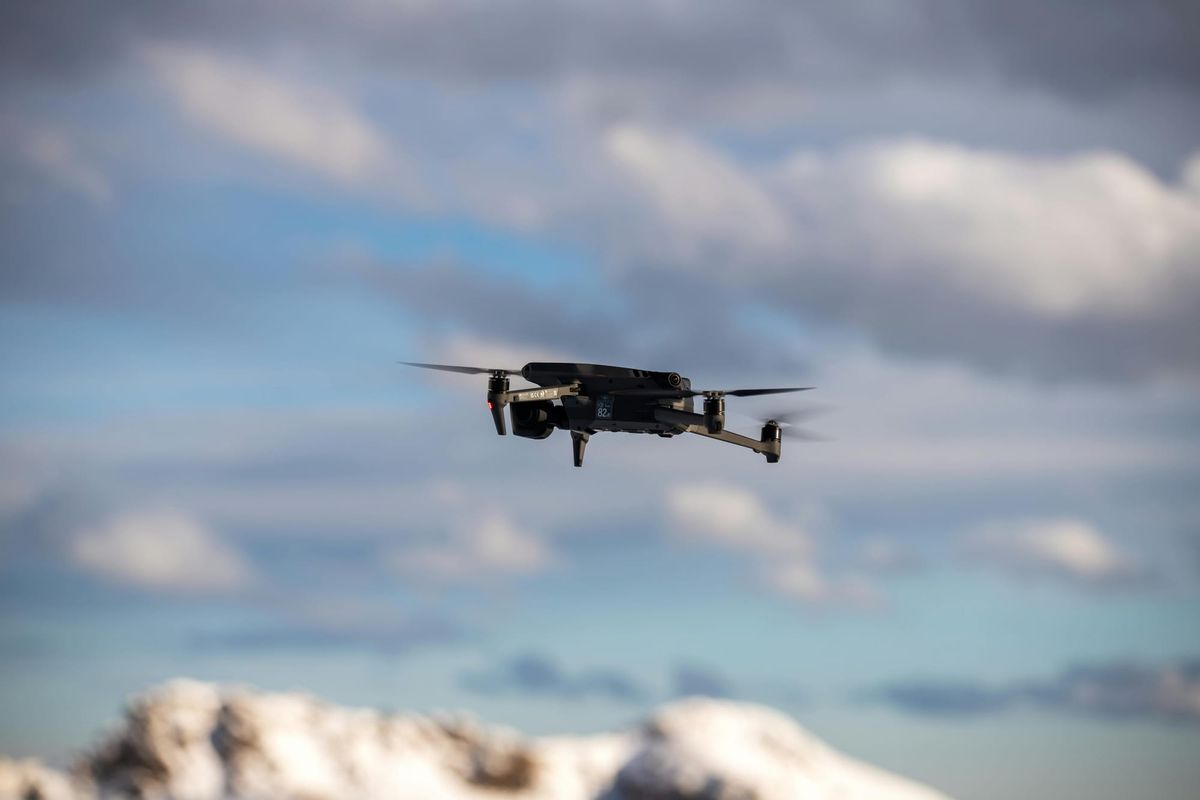
The nine-year-old startup born out of a Facebook firing is now the U.S. Army's most consequential weapons partner. Here's how it happened — and what it means for the future of American warfare.
On the evening of Friday, March 14, 2026, the U.S. Army quietly posted what may be one of the most consequential defense contract announcements in a generation to its daily list of awards. Buried in bureaucratic language was a deal that defense insiders immediately recognized as a watershed moment: a 10-year enterprise agreement worth up to $20 billion, awarded to Anduril Industries — a company that didn't exist nine years ago.
The contract, identified as W9128Z-26-D-A001 and issued by the Army Contracting Command at Aberdeen Proving Ground in Maryland, consolidates more than 120 separate procurement actions that the Department of Defense had previously managed for Anduril products into a single vehicle. It runs through March 2036. Work locations and funding are determined per order, drawing from operations, research and development, procurement, and other accounts.
To understand why this matters, consider the comparison: in 2025, the Army gave Palantir — a 22-year-old company with deep government roots — a $10 billion enterprise deal that consolidated 75 separate contracts. Anduril, founded in 2017 by the guy who invented the Oculus Rift, just doubled that in a single stroke.
It is, by most measures, the largest government contract ever awarded to a venture-backed defense company in U.S. history.
From VR Headsets to Battlefield AI: The Anduril Origin Story
To understand Anduril's rise, you have to start with a small political donation and a very public firing.
Palmer Luckey was 20 years old when he founded Oculus VR, the pioneering virtual reality company, in 2012. Two years later, he sold it to Facebook for approximately $2 billion. By all appearances, he had achieved what most entrepreneurs spend careers chasing. Then, in 2016, Facebook fired him — allegedly because he had donated $10,000 to Nimble America, a pro-Trump political organization active during that year's election.
Luckey landed on his feet in a way few could have predicted. In April 2017, he co-founded Anduril Industries alongside Brian Schimpf, Trae Stephens, Matt Grimm, and Joe Chen — several of whom had come from Palantir Technologies, the data intelligence company that had pioneered the concept of Silicon Valley firms working with the intelligence community and military.
The name "Anduril" was deliberate. Like Palantir, it is drawn from J.R.R. Tolkien's Lord of the Rings — Andúril being the sword reforged for Aragorn, a weapon meant to restore a rightful order. The symbolism was not lost on Luckey, who has spoken openly about his belief that Silicon Valley's retreat from defense work had left the United States dangerously exposed.
That retreat had been real. For years following the Vietnam War era, most major tech companies had distanced themselves from Pentagon work. The culture inside companies like Google coalesced around slogans like "don't be evil," and signing contracts to build weapons systems was, for a generation of engineers, considered anathema. The resulting vacuum was filled by legacy defense primes — Lockheed Martin, Raytheon, Boeing, Northrop Grumman — operating under decades-old business models that incentivized cost overruns and slow delivery.
Luckey and his co-founders saw that gap as an opportunity.
"We only solve in hardware what must be solved in hardware," Luckey has said publicly. "Everything else?" — software.
That philosophy would become Anduril's defining competitive advantage.
The Software-First Weapons Maker
Traditional defense contractors have historically operated on what industry insiders call a "hardware-defined, software-enabled" model: the iron — the jets, the ships, the vehicles — comes first. Software is bolted on as an afterthought. Procurement contracts are written on a cost-plus basis, meaning the government absorbs cost overruns, creating little incentive for efficiency.
Anduril inverted that model. The company is, at its core, a software company that manufactures hardware to realize the full potential of its code. It finances its own research and development through venture capital rather than waiting for government contracts to fund the work — taking on enormous financial risk, but also gaining the freedom to move at commercial speed.
The centerpiece of Anduril's software portfolio is Lattice, an AI-powered operating system and command-and-control platform that functions as the central nervous system for the company's entire ecosystem of products. Lattice uses computer vision, machine learning, and mesh networking to fuse real-time data from disparate sources — drones, ground sensors, radar arrays, satellite feeds — into a single, unified operational picture.
In practice, Lattice can automatically task sensors in real time, directing them toward points of interest. It evaluates available sensors across a theater, assesses their capabilities within existing time constraints, assigns them accordingly, and adjusts those allocations as an operation evolves. According to Anduril's own documentation, the platform is built to "accelerate complex kill chains at machine speed," enabling a single operator to supervise hundreds of autonomous systems simultaneously.
The platform also incorporates simulation tools that model battlefield scenarios, allowing commanders to test and validate operations in a virtual environment before committing to real-world deployment.
That is what the Army just agreed to make the backbone of its battlefield command infrastructure for the next decade.
The $20 Billion Deal: What's Actually in It
The contract announcement was notable not only for its size, but for what it signals about the changing relationship between Silicon Valley and the Pentagon.
The agreement is structured as a firm-fixed-price Indefinite Delivery, Indefinite Quantity (IDIQ) vehicle — a contract type that sets a ceiling on total value but does not obligate funding upfront. The $20 billion figure represents the maximum potential value, not a guaranteed purchase. Under the framework, the Army issues individual task orders as requirements emerge, drawing from multiple funding streams including Operations and Maintenance, Research Development Test and Evaluation (RDT&E), and Other Procurement accounts. Other federal agencies and foreign military sales may also be channeled through the contract.
Within days of the master agreement being signed, the first task order came: an $87 million award to Anduril from the Army-led Joint Interagency Task Force 401 (JIATF-401), a unit focused specifically on counter-unmanned aerial system (C-UAS) operations. JIATF-401 selected Lattice as its enterprise tactical command-and-control platform for counter-drone operations — effectively making Anduril's software the operating standard for how multiple federal agencies coordinate against drone threats.
Army Col. Tony Lindh, JIATF-401's deputy director of acquisitions, described the initiative as establishing a "common technological backbone" that would allow warfighters and federal agents to "seamlessly share data, coordinate responses and neutralize threats faster and more effectively."
The contract's scope encompasses Anduril's proprietary Lattice suite, integrated hardware, data and computing infrastructure, and technical support services. The Army Contracting Command at Aberdeen Proving Ground, Maryland, serves as the oversight authority. An estimated completion date is set for March 12, 2036.
The DoD said the deal would "speed delivery of technology to soldiers." Army CTO Gabe Chiulli stated in a formal release: "The modern battlefield is increasingly defined by software. To maintain our advantage, we must be able to acquire and deploy software capabilities with speed and efficiency."
What the announcement was careful to note — and what some reporting has glossed over — is that the $20 billion ceiling is not an immediate appropriation, nor is it a blanket handoff of every future Army digital program to Anduril. The contract is a procurement vehicle. The Army will issue orders against it as operational needs dictate and as funds are appropriated by Congress.
Why Now? The Drone Threat Context
The timing of the contract is inseparable from the realities of the modern battlefield.
In Ukraine, cheap commercial drones have become the dominant tactical weapon of the war — capable of delivering precision strikes at a fraction of the cost of traditional munitions. Iran has unleashed drone swarms against U.S. forces operating in the Persian Gulf. Adversaries including China, Russia, and Iran have all invested heavily in unmanned systems, and none of them have signed U.S.-initiated pledges to deploy military AI responsibly.
Meanwhile, the Pentagon's Defense Autonomous Working Group (DAWG) — the lead Pentagon office for drone warfare — has seen its budget proposal jump from $226 million in the current fiscal year to a proposed $55 billion under the administration's fiscal year 2027 spending request. That number, if appropriated, would represent a structural shift of historic proportions: the equivalent of standing up a new branch of the military dedicated entirely to autonomous systems.
Against that backdrop, the Anduril deal is a direct response to an identified operational gap. JIATF-401 previously managed over 120 separate procurement actions for Anduril solutions alone — a level of administrative fragmentation that slowed deployment and hampered interoperability between agencies. The enterprise contract eliminates that friction, allowing the government to move at something approximating commercial speed.
The contract also eliminates pass-through charges on subcontracts, a feature the Army said would reduce overall costs and administrative burden.
The Company Behind the Contract
Anduril today employs approximately 7,000 people and generates roughly $2 billion in annual revenue, a figure that more than doubled year-over-year between 2024 and 2025. The company projects revenues of $4.3 billion for 2026, though it acknowledges it will also carry approximately $1 billion in losses this year and does not expect to reach profitability until around 2030.
Despite that, investor appetite has been extraordinary. In May 2026, Anduril closed a $5 billion Series H funding round that valued the company at $30.5 billion — the largest defense-tech venture raise on record, cementing its position as the most valuable venture-backed defense startup in the world. Reports indicate the company is now in discussions to raise a further round at a valuation approaching $60 to $61 billion.
While Palmer Luckey serves as the company's public face and strategic visionary, the operational center of gravity is CEO Brian Schimpf, a 42-year-old former Palantir employee who has led the company since its founding. Trae Stephens serves as Executive Chairman; Matt Grimm as COO.
Anduril's contract portfolio extends far beyond the Army deal. The company holds:
- A $1 billion counter-drone IDIQ with U.S. Special Operations Command spanning 10 years
- A position in a $1.8 billion Space Force contract for space domain awareness
- A role in the Air Force's Collaborative Combat Aircraft program, in partnership with Shield AI, for the Fury autonomous fighter jet
- The Thunderdome contract ($99 million through 2030) for zero-trust cybersecurity on Air Force installations
- Multiple border security contracts for autonomous surveillance towers
- A Dutch Ministry of Defence counter-UAS contract signed in May 2026
- A U.S. Army Indo-Pacific missile-defense task order built around the Lattice software platform
Anduril also made two significant acquisitions in 2026: American Infrared Solutions (infrared cameras and components) and ExoAnalytic Solutions, a space domain awareness firm that uses more than 400 telescopes to track objects in orbit for the U.S. military and its allies.
The company is also widely reported to be the leading contender to take over the Army's troubled $22 billion IVAS (Integrated Visual Augmentation System) program from Microsoft, which has struggled to deliver a working product under a traditional cost-plus model.
The Disruption of the Defense Industrial Base
What Anduril represents is something more fundamental than just another defense contractor winning a big deal. It represents a structural challenge to an industrial model that has dominated American defense procurement for decades.
Legacy primes like Lockheed Martin, Raytheon, Boeing, and Northrop Grumman have long operated as the de facto monopoly suppliers of advanced military hardware. They win contracts on cost-plus terms, develop systems over periods of 10 to 15 years, and have limited incentive to deliver early or under budget because overruns are absorbed by the government.
Anduril, by contrast, builds systems in two to three years using its own capital. It uses firm-fixed-price contracts — meaning it, not the taxpayer, absorbs cost overruns. Its gross margins of roughly 40 to 45 percent dramatically outpace the 8 to 10 percent typical of established defense primes, a reflection of its software-heavy business model.
The financial comparison is stark. Lockheed Martin currently carries a market capitalization of approximately $155 billion. Raytheon Technologies hovers around $272 billion. Anduril, still private, is being valued in its latest funding rounds at up to $61 billion — and it hasn't yet turned a profit.
That gap reflects both the premium investors are placing on growth trajectory and the genuine uncertainty about whether Anduril can scale production to the levels its contracts now require.
The March deal marks what Fortune described as the moment when the Pentagon's relationship with defense tech startups "moved into the serious phase" — no longer dabbling in limited pilot projects, but placing institutional bets on a select few companies with the kind of fixed-price deals that have long been the standard among established primes.
The Critics and the Concerns
The contract has not been without controversy. Several overlapping lines of criticism have emerged from Congress, academia, and civil society.
The oversight question. DoD Directive 3000.09, updated in 2023, stipulates that "autonomous and semi-autonomous weapon systems will be designed to allow commanders and operators to exercise appropriate levels of human judgment over the use of force." As Anduril's systems scale — and as the Army's broader $55 billion drone warfare budget materializes — senators including Joni Ernst have publicly questioned whether existing policy is equipped for this level of autonomous deployment. A bill introduced this week in Congress would further restrict the Pentagon's use of AI in autonomous weapons operations, though its prospects remain uncertain.
The conflict of interest question. Senator Elizabeth Warren has raised alarm about the nomination of an Anduril senior director — who holds between $250,000 and $500,000 in Anduril stock — for the position of Army Under Secretary, a role that would oversee Army contracting. "If you were to participate in a decision about an Anduril contract, your prior employment relationship with the company would lead the public to reasonably question whether you were more motivated to protect the company's interests than the public interest," Warren wrote in a formal letter.
The political connection question. Palmer Luckey is a major Republican donor and Trump supporter. The $20 billion contract was awarded by the Trump administration. Critics, including reporting by The Daily Beast, have highlighted the political dimensions of the deal, though no evidence of improper influence has been presented publicly. Anduril has defended the award as the result of a competitive and legitimate procurement process.
The cybersecurity question. A recent Army internal memorandum, separately reported, warned of security gaps in an associated Anduril/Palantir command-and-control system and underscored the importance of rigorous cybersecurity reviews as the Lattice platform is integrated more deeply into Army infrastructure.
The ethics and accountability question. Luckey has been vocal in defending AI's role in lethal decision-making, a stance that draws sustained criticism from arms control researchers and some military ethicists who argue that the acceleration toward autonomous kill chains is outpacing the legal and ethical frameworks designed to govern them. OpenAI saw a senior executive resign earlier this year over similar concerns about that company's Pentagon deal. Anthropic, separately, has been reported to be in a dispute with the DoD after the Pentagon classified it as a "supply-chain risk" for insisting on ethical constraints around autonomous weapons and surveillance use of its AI models.
The Broader Silicon Valley Shift
Whatever one's view of the policy implications, the cultural shift underway in American tech is unmistakable.
Anduril's early success broke the ice. Companies that once publicly pledged to avoid defense work have reversed course. OpenAI has partnered with Anduril on anti-drone technology. Google struck a Pentagon AI deal this spring. Meta is collaborating with Anduril on virtual reality training systems for soldiers. The AI labs that only years ago competed for talent by promising engineers they would never work on weapons are now signed up as suppliers to the Department of Defense.
Luckey has said publicly that he sees this shift as both inevitable and overdue. In his telling, the years when Silicon Valley turned its back on defense were years that adversaries used to close the technology gap with the United States. Whether or not one shares that view, the strategic logic is increasingly difficult for policymakers to dismiss: China, Russia, Iran, and North Korea are all accelerating military AI programs, and none of them are constrained by the ethical debates playing out in San Francisco boardrooms.
Defense tech investment has followed. Venture funding for defense-focused startups reached $29 billion in 2025, nearly triple 2020 levels. So far in 2026, 107 venture rounds have been announced in the sector, and Anduril's $5 billion Series H was joined by major raises from Shield AI ($1.5 billion at $12.7 billion valuation), Saronic ($600 million at $4 billion), and Helsing ($1.2 billion at $18 billion). An AI drone company called Swarmer became the latest defense tech IPO earlier this year, with shares surging more than 500% on their first trading day.
What Comes Next
The $20 billion Army contract is not the end of Anduril's trajectory — it may be closer to the beginning.
The company's Lattice platform is now being developed as an integrated air and missile defense "battle manager" for the Western Pacific, under a separate Army contract, to support deterrence against China. Shield AI's Hivemind autonomous pilot software has been selected for Anduril's Fury fighter jet under the Air Force's Collaborative Combat Aircraft program. Anduril's autonomous underwater vehicles — the Dive-LD and Dive-XL — have won competitive evaluations against legacy defense offerings for the Navy.
An IPO remains on the horizon, though no timeline has been set. The company says it doesn't expect profitability until 2030, but with a $20 billion contract ceiling now on the books and more task orders likely to follow, its path to public markets has never looked cleaner. Investors and analysts watching the secondary market for Anduril shares have noted that bid-ask spreads for the company's pre-IPO equity have tightened significantly in recent months — a reflection of how legible Anduril's business has become now that DoD award filings provide a public window into its backlog.
For the U.S. military, the deal represents a gamble on a new model — one that trades the institutional predictability of legacy primes for the speed, flexibility, and software-first capability of a Silicon Valley startup. Whether the Pentagon can effectively oversee an enterprise of this scale, with a company still years from profitability and operating at the leading edge of autonomous warfare, remains the central open question.
What is no longer in question is where Anduril stands in the American defense industrial base. The startup that began in a converted garage in Orange County — named after a fictional sword, funded by a billionaire who was fired from Facebook, built by engineers who were told defense work was beneath them — is now the Army's most consequential technology partner.
The rules of war are being rewritten. Anduril is holding the pen.
ArmedForcesNews.com is an independent military news publication. This article was researched and written using verified public sources including Bloomberg, TechCrunch, DefenseScoop, Defense One, Fortune, the Army Contracting Command, and official DoD contract announcements. Contract number W9128Z-26-D-A001 is publicly available in federal procurement records. Figures attributed to company financials are drawn from investor disclosures and reported revenue projections.
EDITOR'S NOTE ON SOURCING: All contract figures in this article reflect the maximum potential value of the IDIQ vehicle, not obligated spending. The $20 billion ceiling does not represent an immediate appropriation. Funding is determined per individual task order. No evidence of improper procurement influence has been established in relation to this contract. Congressional criticism cited reflects publicly available statements on the record.